Friday, June 4, 2010

भगवान परशुराम का जन्म स्थान : रेणुका माता का मंदिर

On the eve of Devprabodini Akadshi the Five day long state level Shri Renuka Ji fair as begin with the arrival of son Lord Parshuram at Shri Renuka Ji Lake in Himachal, the home of his divine mother Shri Renuka Ji. During five day fair several lakhs of devotees from all over the country arrives here to witness the holy occasion of divine meeting of Lord Parshum & his mother Renuka Ji.

According to Purans the Renuka Tirth is considered as birth place of Lord Parshuram, the sixth incarnation of Lord Vishnu. Maharish Jamdagni and his wife Bhagwati Renuka Ji had meditated for long time at a hillock known as Tape Ka Tiba near Renuka lake. With the blessings of Lord Shiva, Lord Shri Hari Vishnu fulfilled divine promise and took birth as their son. Sixth incarnation of Lord Vishnu and son of Renuka Ji pleased Lord Shiva with the performation of Tapa [high intensity mediation] got a new name Parshuram after getting divine weapon Parshu from Lord Shiva. He has been referred every where in the Shashtras with the popular name Parshuram and not his childhood name Ram [as per Brahmand Puran], which he got from his parents.

He always supported the cause of good governance where worries of every citizen are addressed judiciously by themela-renuka-2rulers. To get people rid of atrocities of cruel rulers Lord Parshuram eliminated 21 times, cruel and atrocious rulers from the earth. He also killed King Sahastrabahu and his Army as King had attacked Tape ka Tiba Ashram in his absence, to get the Kamdhenu cow from Maharishi. After Maharishi pleaded that the Kamdhenu Cow was given him by Lord Indra in trust and he can not breach the trust by passing it to someone else. Shastrabahu killed Maharishi Jamdagni. Lord Parshurams mother Bhagwati Renuka Ji jumped in the Ram Sarovar and took Jal Samadhi. Purans narrates that Ram Sarovar immediately took the shape of a lady and since than it is known as Renuka Ji Lake.

After eliminating Sahashtrabahu in fierce battle he gave a new life to his father with his divine powers and came on the bank of the Lake and prayed his mother to come out of the Lake. Mother responded to his prayers and lord vowed in her feet. She said that she will permanently live in the Lake, but on the request of Lord Parshuram she promised that she will come out of the Lake on the occasion of Devprabodhini Ekadashi every year to meet her son. Bhagwati also promised that people gracing this pious occasion of mothers affection and sons devotion, would be showered with divine blessings.mela-renuka-3

One day advance, on Dashmi the palanquin of Lord Parshuram is brought to Renuka Ji from the ancient temple in Jamu Koti village in traditional procession known a ‘Shobha Yatra’, attended by lakhs of devotees।Saints from every parts of country have arrived at Renuka Ji to witness holy and divine assembly of mother and son. The administration has made all the necessary arrangements for peaceful holding the fair. Elaborate security arrangements have been made keeping view terrorist activities in the different parts of the country.


Navagraha Stotram

माँ सती के इक्यावन शक्ति - पीठ


In Satya Yuga, Daksha performed a yagna with a desire of taking revenge on Lord Shiva. Daksha was angry because his daughter Sati had married Lord Shiva against his wishes. Daksha invited all the deities to the yagna except for Shiva and Sati. The fact that she was not invited did not deter Sati from attending the yagna. But Sati, being an uninvited guest, was not given any respect. Furthermore, Daksha insulted Shiva. Sati was unable to bear her father’s insults toward her husband, so she committed suicide by jumping into the pyre. When Lord Shiva heard about her death he became furious. He went to the place where Daksha was performing his yagna and destroyed the area. Daksha was killed by Shiva’s ganas.

Lord Shiva then carried Sati’s body all over the world in a state of wild grief. At the request of all other gods, Lord Vishnu severed Sati’s body into 51 pieces with his Sudarshan Chakra, so that Lord Shiva could return to his sanity and once again take up his duties. Various parts of Sati’s body fell at different places which became known as Shakti Peethas. At all Shakti Peethas, the Goddess Shakti is accompanied by Lord Bhairava (a manifestation of Lord Shiva).

List of 51 Shakti Peetha of Goddess Durga

Sr. No. Place Organ or Ornament Shakti Bhairava
1 KanchiPuram, Kamatchi temple,Kamakoti Peetam mentioned in Lalita Sahasram,Trishati,Astothram etc. Ottiyana (Ornament covering stomach) Kamakshi Kala Bhairav
2 Sri Lanka, in Nainativu, Jaffna Hand Indrakshi / Nagapooshani Rakshaseshwar / Naayanar
3 Naina, a little distance from Sukkur Station from Karachi, Pakistan Eyes Mahishmardini Krodhish
4 Sugandha, situated in Shikarpur, Gournadi, about 20 km from Barisal town, Bangladesh, on the banks of Sonda river. Nose Sunanda Trayambak
5 Amarnath in Kashmir, India from Srinagar through Pahalgam 94 km by Bus, Chandanwari 16 km by walk Throat Mahamaya Trisandhyeshwar
6 Jwalamukhi, Kangra, India from Pathankot alight at Jwalamukhi Road Station from there 20 km. Tongue Siddhida (Ambika) Unmatta Bhairav
7 Ambaji, at Anart, Gujarat, India Heart Ambaji
8 Nepal, near Pashupatinath Temple at Gujyeshwari Temple Both Knees Mahashira Kapali
9 Manas, under Tibet at the feet of Mount Kailash in Lake Mansarovar, a piece of Stone Right Hand Dakshayani Amar
10 Biraja in Utkal present Orissa, India Navel Girija/Viraja/Biraja Jagannath
11 Gandaki from Pokhara, Nepal about 125 km on the banks of Gandaki river where Muktinath temple is situated Temple Gandaki Chandi Chakrapani
12 Bahula, on the banks of Ajay river, at Ketugram 8 km from Katwa, Burdwan, West Bengal, India. Left Arm Goddess Bahula Bhiruk
13 Ujaani, 16 km from Guskara Station under Burdwan district of West Bengal, India Right Wrist Mangal Chandika Kapilambar
14 Udaipur, Tripura, at the top of the hills known as Tripura Sundari temple near Radhakishorepur village, a little distance away from Udaipur town of Tripura, India Right Leg Tripura Sundari Tripuresh
15 On the Chandranath hill near Sitakunda station of Chittagong District, Bangladesh. The famous Chandranath Temple on the top of the hill is the Bhairav temple of this Shakti Peetha, not the Shakti Peeth itself. Right Arm Bhawani Chandrashekhar
16 Trisrota, at Salbari village under Boda division of Jalpaiguri district, West Bengal, India Left Leg Bhraamari Ambar
17 Kamgiri, Kamakhya, at the Neelachal hills near Guwahati, capital of Assam, India Genital Organ Kamakhya Umanand
18 yogaadya at Khirgram under Burdwan district, West Bengal, India Great Toe (Right) Jugaadya Ksheer Khandak
19 Kalipeeth, (Kalighat, Kolkata), India Right Toes Kalika Nakuleesh
20 Prayag near Sangam at Allahabad, Uttar Pradesh, India Finger (Hand) Lalita Bhava
21 Jayanti at Kalajore Baurbhag village of Falzur Pargana under Jayantia Thana of Sylhet district, Bangladesh. This Shakti Peetha is locally known as Falizur Kalibari. Left Thigh Jayanti Kramadishwar
22 Kireet at Kireetkona village, 3 km from Lalbag Court Road station under district Murshidabad, West Bengal, India Crown Vimla Sanwart
23 Varanasi at Manikarnika Ghat on banks of Ganga at Kashi, Uttar Pradesh, India Earring Vishalakshi & Manikarni Kalbhairav
24 Kanyashram, Kanyakumari the Bhadrakali temple within the precincts of Kumari temple, Tamil Nadu, India (also thought to be situated in Chittagong, Bangladesh) Back Sarvani Nimish
25 Present day Kurukshetra town or Thanesar ancient Sthaneshwar, at Haryana, India Ankle Bone Savitri Sthanu
26 Manibandh, at Gayatri hills near Pushkar 11 km towards north-west from Ajmer, Rajasthan, India. Two Bracelets Gayatri Sarvanand
27 Shri Shail, at Jainpur village, near Gotatikar, towards north-east 3 km from Sylhet town, Bangladesh Neck Mahalaxmi Sambaranand
28 Kankalitala, on the banks of Kopai river 10 km towards north-east from Bolpur station of district Birbhum, Devi locally known as KankaleshwariWest Bengal, India Bone Devgarbha Ruru
29 Kalmadhav on the banks of Shon river in a cave over hills near to Amarkantak, Madhya Pradesh, India Buttock (Left) Kali Asitang
30 Shondesh, at the source point of Narmada river in Amarkantak, Madhya Pradesh, India Buttock (Right) Narmada Bhadrasen
31 Ramgiri, at Chitrakuta on the Jhansi Manikpur Railway line in Uttar Pradesh, India Right Breast Shivani Chanda
32 Vrindavan, near new bus stand on Bhuteshwar road within Bhuteshwar Mahadev Temple, Vrindavan, Uttar Pradesh, India Ringlets of Hair Uma Bhutesh
33 Shuchi, in a Shiva temple at Shuchitirtham 11 km on Kanyakumari Trivandrum road, Tamil Nadu, India Teeth (Upper Jaw) Narayani Sanhar
34 Panchsagar place not known (thought to be near Haridwar) Teeth (Lower Jaw) Varahi Maharudra
35 Karatoyatat, at Bhabanipur village 28 km distance from interior Sherpur. Alight at Bogra station under district Bogra, Bangladesh Left Anklet (Ornament) Arpana Vaman
36 Shri Parvat, near Ladak, Kashmir, India. Another belief: at Srisailam in Shriparvat hills under Karnool district, Andhra Pradesh, India Right Anklet (Ornament) Shrisundari Sundaranand
37 Vibhash, at Tamluk under district Purba Medinipur, West Bengal, India Left Ankle Kapalini (Bhimarupa) Sarvanand
38 Prabhas, 4 km distance from Veraval station near Somnath temple in Junagadh district of Gujarat, India Stomach Chandrabhaga Vakratund
39 Bhairavparvat, at Bhairav hills on the banks of Shipra river a little distance from Ujjaini town, Madhya Pradesh, India Upper Lips Avanti Lambkarna
40 Jansthan, at Godavari river valley near Nasik, Maharasthra, India Chin (Two Parts) Bhramari Vikritaksh
41 Sarvashail or Godavaritir, at Kotilingeswar temple on the banks of Godavari river near Rajamundry, Andhra Pradesh, India Cheeks Rakini or Vishweshwari Vatsnabh or Dandpani
42 Birat, near Bharatpur, Rajasthan, India Left Feet Fingers Ambika Amriteshwar
43 Ratnavali, on the banks of Ratnakar river at Khanakul-Krishnanagar, district Hooghly, West Bengal, India Right Shoulder Kumari Shiva
44 Mithila, near Janakpur Railway station on the boarder of India-Nepal Left Shoulder Uma Mahodar
45 Nalhati,known as "Nalateshwari Temple" near Nalhati station of Birbhum district by rickshaw, West Bengal, India Tubular Bones of the Feet Kalika Devi Yogesh
46 Karnat place not known Both Ears Jayadurga Abhiru
47 Bakreshwar, on the banks of Paaphara river, 24 km distance from Siuri Town, district Birbhum,7km from Dubrajpur Rly. Station West Bengal, India Portion between the eyebrows Mahishmardini Vakranath
48 Jessoreswari, situated at Ishwaripur, Shyamnagar, district Satkhira, Bangladesh. The temple complex was built by Raja Pratapaditya, whose capital was Ishwaripur. Palms of Hands & Feet Jashoreshwari Chanda
49 Attahas village of Dakshindihi in the district of Bardhaman, near the Katwa Rail Station, in West Bengal, India Lips Phullara Vishvesh
50 Sainthia, locally Known as "Nandikeshwari" temple. Earlier Nandipur/Now in Sainthia Town. only 1.5 km from Railway Station under a banyan tree within a boundary wall, Birbhum district, West Bengal, India Necklace Nandini Nandikeshwar
51 Hinglaj (Or Hingula), southern Baluchistan a few hours North-east of Gawadar and about 125 km towards North-west from Karachi, Pakistan Bramharandhra (Part of the head) Kottari Bhimlochan
52 Danteshwari ( Kuldevi Of Baster State ), Dantewada Baster 80 km's from Jagdalpur Chhattisgarh Daant (Teeth) Danteshwari Kapalbhairv


भगवान शिव के 12 ज्योतिर्लिंग

12 Jyotirlinga of Lord Shankar

According to Linga Purana once Brahma and Vishnu started fighting over who was the supreme being. Suddenly, there appeared a Sivalinga before them as a huge column of fire. Both of them decided to find one end each. Whoever returned first would be acknowledged as supreme. Vishnu assumed the form of a boar and went down. Brahma, in the form of a swan, flew upwards. They searched for days but in vain. Then Shiva appeared in the fiery column. Brahma and Vishnu realised their mistake and acknowledged Shiva as the Supreme Being. The Shivalinga represents that column of fire as 12 Jyotirlingas.

There are 12 famous Jyotirlingas where Lord Shiva appeared in the form of light (Jyothi) lingam. These have been worshipped from time immemorial. They are mentioned in the Dwadasa Jyotirlinga Stotra given here.

Vaidyanath Jyotirlinga Bhimashankara Kedarnath


Mahakaleswar Mallikarjuna Omkaresswar


Somnath Trayembakeswar Rameshwaram


Nagneswar Kashi Vishwanath Grishneswar
12

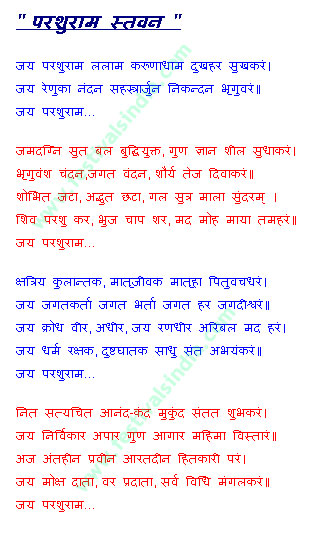
आरती परशुराम जी की


Thursday, June 3, 2010

शहीद राम रखा बाली को श्रद्धांजलि


देश के लिए बलिदान देने में मोहयाल कभी पीछे नहीं रहे हैं। स्वतंत्रता आन्दोलन में भाग लेकर स्वर्गीय राम रखा बाली अंडमान की जेल में शहीद हो गए. मोहयाल सभा देहरादून की ओर से मोहयाल भवन देहरादून में एक जून को प्रात १० बजे सर्व धर्म समभाव सभा का आयोजन किया गया. इसमें देहरादून के गणमान्य मोहयालों ने शहीद राम रखा बाली को श्रद्धा- सुमन अर्पित किए। इस सभा में श्री राजीव दत्ता , लाल प्रवेश मेहता वैद ( उप प्रधान) , राजेश मोहन (सचिव ) प्रमोद मेहता (सचिव वित्त ). स्क्वैड्रन लीडर एस के छिब्बर ( शहीद राम रखा बाली के पौत्र )सपरिवार उपस्थित थे . उनके परिवारजन और श्री संदीप दत्ता ने उन्हें श्रद्धांजलि दी।
समस्त मोहयाल जगत तथा 'जय मोहयाल ' परिवार की ओर से हम स्वर्गीय राम रखा बाली जी को श्रद्धांजलि अर्पित करते हैं।

Tuesday, June 1, 2010

पैसा बढ़ जाए तो...

जो जल बाढ़ें नाव में, घर में बाढ़ै दाम।

दोऊ हाथ उलीचिए, यह सज्जन को काम॥
---कबीर

राधा और कृष्ण के संबंधों पर प्रश्न नहीं लग सकते

राधा और कृष्ण के सम्बन्ध में यह चर्चा बार-बार होती रही है और हर नयी पीढी करती भी रहेगी कि श्री कृष्ण ने प्रेम राधा से किया और विवाह रुक्मिणी से क्यों किया।
यदि कृष्ण को विष्णु के अवतार के रूप में मानें तो किसी बहस की आवयश्कता ही नहीं है. भगवान अवतार लेते हैं तो संपूर्ण लीलाओं का निर्धारण करके ही लेते हैं। गोपियाँ-ग्वाले सब उन्हीं के अंश हैं। परमात्मा और आत्मा का एकाकार हैं। अद्वैत की स्थिति है।
समकालीन परिस्थियों में विवाहेतर संबधों की मान्यता समाज नहीं देता। यह व्यक्तियों पर लागू होता है। यदि श्री कृष्ण और राधा के संबंधों के विषय में इस पर चर्चा उन्हें सामान्य जन के रूप में मानते हुए करें तो यह आज के समाज से मान्य नहीं हो सकते। इस स्थिति में तो वेद व्यास रचित सारे महाभारत की कथाओं पर प्रश्न पर प्रश्न चिह्न लग जायेंगें। इस परिप्रेक्ष्य में यह तो छोटा - सा प्रसंग है।
अतः ऐसे प्रश्न करना निरर्थक है । मेरे विचारानुसार कृष्ण और राधा के संबधों पर मनुष्य के रूप में चर्चा करना व्यर्थ है। भगवान के सम्बन्ध में मात्र श्रद्धा भाव ही होना चाहिए।
--अशोक लव

Monday, May 31, 2010

"दत्त " मोहयालों के गोत्र ऋषि ' भरद्वाज '

श्रीमती प्रभा दत्ता ( शिक्षाविद,गुडगाँव ) श्रीमती नीता बाली के साथ

स्वर्गीय श्री एन डी दत्ता ( कार्यकारी संपादक-मोहयाल मित्र )


Bharadwaja (Devanagari: भरद्वाज / भारद्वाज) is one of the greatest Hindu sages (Maharshis), descendant of rishi Angirasa, whose accomplishments are detailed in the Puranas. He is one of the Saptarshis (Seven Great Sages Rishi) in the present Manvantara; with others being Atri, Vashishtha, Vishvamitra, Gautama, Jamadagni, Kashyapa.[1].

Bharadwaja rishi was father of Dronacharya and grand father of Ashwatthama. Bharadwaja Maharshi, a sage of the Vedic period, is renowned for his thirst for knowledge. He attained extraordinary scholarship and the power of meditation.


History

Bharadwaj as Gotra means people who are the descendants of Rishi Bharadwaj. Rishi Bharadwaj was the son of sage Brihaspati. Sage Brihaspati was the son of Rishi Angiras. These 3 rishis are called the traya rishi of the Bharadwaj Gotra.in earlier days Sages were only Brahmins excepting Sage Vishwamitra. Also all the warrior brahmins became Kshatriyas later. Later all the business minded Kshatriyas became vaishyas. Hence there are people of all the three communities having a common Gotra especially Bhardwaj Gotra. Guru Dronacharya was the son of sage Bharadwaj. All the descendants of Bharadwaj Gotra display warrior skills because sage Bharadwaj married a Kshatriya woman called Suseela. According to Anuloma marriage, the offsprings who are born to a brahmin father and a kshatriya woman take the characteristics of Kshatriya though technically being a Brahmin. Hence the brahmin descandants of Bharadwaj Gotra are referred to as Brahma-Kshatriyas (Warrior Brahmins). They are considered to have intelligence in Vedas and war [2][3]

The ashram of Bhardwaj rishi still stands on the banks of river Ganges in Allahbad, India.

Bharadwaja in Ramayana

Rama, Sita and Lakshaman meet sage Bharadwaja

In Ramayana, Rama along with Sita and Lakshmana went on exile for the words of his father. Rama along with them went through many forest regions starting from crossing yamuna river with help of Guha ,head clanman and a friend of Rama's father Dasaratha. As he travelled he visited many rishi's ashrams. Met many rishis and sages including Agasthiyar, Gauthama and Bharadwaja. Rama and others rested in Bharadwaj's ashram and accepted his offerings.

Gotra

In India, Bharadwaja is an ancestor of Brahmin People belonging to the Bharadwaja gotra. Bharadwaja who is the great grand son of Lord Brahma is the root for his clan, Bharadwaja gotra.

Inhabitance

  • Odisha: The saraswata Bramhins in Odisha are of Bharadwaja Gotra
  • Kashmir: among Saraswat Brahmins who migrated to Himalayas.
  • Himachal Pradesh: around 60% of Brahmins have Bharadwaja as their gotra.
  • Punjab: around 45% of Brahmins have Bharadwaja as their gotra.
  • Haryana: around 40%-45% of Brahmins have Bharadwaja as their gotra.
  • Rajasthan: around 35% of Rajasthani Brahmins have Bharadwaja as their gotra, Rigveda as vedanta and kuldevta as Shri Lakshmi Narsimha or Shri Narasimha.
  • Maharashtra
  • Among Iyers and Iyengars In TamilNadu and nambudiri In Kerala.
  • Aruvela Niyogi brahmans in Andhra Pradesh
  • Vaidiki velanadi brahmans in Andhra Pradesh
  • Madhwa and Smartha brahmins in Karnataka.
  • Indian states of Bihar, Jharkhand, Uttar Pradesh and Bundelkhand region of Madhya Pradesh: Bhumihar Brahmins have Bharadwaja as their Gotra.
  • Mauritius (Country)- Speaking language- Hindi, Bhojpuri, Magadhi

References

  1. ^ Inhabitants of the Worlds
    Mahanirvana Tantra, translated by Arthur Avalon, (Sir John Woodroffe), 1913, Introduction and Preface
  2. ^ http://wiki.answers.com/Q/People_who_have_bhardwaj_gotra_in_brahmins
  3. ^ http://www.indiandance.ru/En/Mahabharata.htm

"बाली " मोहयालों के गोत्र ऋषि ' पराशर '

सुपरिचित बाली मोहयाल


मोहयाल रत्न रायजादा बी डी बाली , प्रसिद्ध उद्योगपति , अध्यक्ष - जनरल मोहयाल सभा
श्रीमती नीता बाली


श्री पवन बाली ( जालंधर) एवं मोहयाल गौरव पुष्प बाली ( सदस्य कार्यकारिणी-जनरल मोहयाल सभा , अध्यक्ष-यूथ मोहयाल विंग,जालंधर )


अश्वनी बाली , सदस्य कार्यकारिणी -जनरल मोहयाल सभा , प्रेसिडेंट - मोहयाल सभा महरौली

Parāśara
is a Rigvedic Maharishi and author of many ancient Indian texts. Parāśara was the grandson of Vasishtha, the son of Shakti-muni, and the father of Vyasa. There are several texts which give reference to Parāśara as an author/speaker. Modern scholars believe that there were many individuals who used this name throughout time whereas others assert that the same Parāśara taught these various texts and the time of writing them varied. The actual sage himself never wrote the texts, he was known as a traveling teacher, and the various texts attributed to him are given in reference to Parāśara being the speaker to his student.[citation needed]

Contents

Genealogy

According to vedas which is the word of GOD The Supreme personality of Godhead Lord Krishna, Brahma created Vasishtha who with Arundhati had a son named Shakti-muni who sired Parāśara. With Satyavati, Parāśara fathered Vyasa. Vyasa sired Dhritarashtra, Pandu and Vidura through his dead brother's wives. He sired Śuka through his wife, Jābāli's daughter Pinjalā (Vatikā)[1]. Thus Parashara was the great-grandfather of both the warring parties of the Mahābhārata, the Kauravas and the Pāndavas.

Life

Parāśara Muni was raised by his grandfather, Vasishtha, because he lost his father at an early age. His father, Shakti-muni, was on a journey and came across an angry Rakshasa (demon) who had once been a king but was turned into a demon feeding on human flesh as a curse from Vishwamitra. The demon devoured Parāśara’s father. In the Visnu Purana, Parāśara speaks about his anger from this: [2]

"I had heard that my father had been devoured by a Rakshasa employed by Vishwamitra: violent anger seized me, and I commenced a sacrifice for the destruction of the Rakshasas: hundreds of them were reduced to ashes by the rite, when, as they were about to be entirely exterminated, my grandfather Vasishtha said to me: Enough, my child; let thy wrath be appeased: the Rakshasas are not culpable: thy father's death was the work of destiny. Anger is the passion of fools; it becometh not a wise man. By whom, it may be asked, is any one killed? Every man reaps the consequences of his own acts. Anger, my son, is the destruction of all that man obtains by arduous exertions, of fame, and of devout austerities; and prevents the attainment of heaven or of emancipation. The chief sages always shun wrath: be not subject to its influence, my child. Let no more of these unoffending spirits of darkness be consumed. Mercy is the might of the righteous.”

Sage Parashara, on one of his travels across the country, halted for the night in a little hamlet on the banks of the river Ganga. He was put up in the house of the village chief. When dawn broke, the chief asked his daughter, Satyavati, to ferry the sage to his next destination. When in the ferry, Parashara was offended by the stench of raw fish. According to legend, the Ganga has no fish within her waters. He asked Satyavati as to from where the foul stench was emanating. Satyavati was a fisherman's daughter, and pursued the same occupation. It was from her the stench emanated. Realising this, Parashara gave her the epithet "Matsyagandha", meaning "one with the smell of fish". Satyavati was thoroughly ashamed. Parashara felt sorry for his cruelty, and instantly granted her the boon, that the finest fragrance may emit from her person.

Parashara grew attached to Satyavati, and desired to perform coitus with her. But Satyavati was ashamed of doing so, as there were many people present on either sides of Ganga. So Parasara Muni, with his mystic power, created a dense sheet of mist around an island on Ganga and in due course, they had a son, by name Vyasa. But Parashara's wandering ascetic life did not suit Satyavati, and the couple separated. While parting, Parashara granted Satyavati another boon; that she may have her lost virginity back. Satyavati returned to her father after this, and in due course, married Shantanu.

Parāśara was known as the "limping sage". He had his leg wounded during the attack of his ashram. When a rishi dies he merges back into an element or an archeype, Sage Jaimini was trampled by wild elephants, Sage Gautama was eaten by Cannibals, etc. When Sage Parāśara was walking through a dense forest he and his students were attacked by wolves. He was unable to get away in his old age with a lame leg he left this world merging into the wolves [3].

The birth place of Parashar Muni is believed to be at Panhala fort in Kolhapur district of Maharashtra. A cave supposed to be of Parashar Muni is present at the fort.

[edit] Rigveda

In the Rigveda, Parāśara, son of Sakti-Muni (Parāśara Śāktya), is the seer of verses 1.65-73 which are all in praise of Agni (the sacred fire), and part of 9.97 (v.31-44) which is in praise of Soma. Below is 1.73.2

devo na yaḥ savitā satyamanmā kratvā nipāti vṛjanāni viṣvā
purupraṣasto amatirna satya ātmeva Sevo didhiṣāyyo bhūt

He who is like the divine Sun, who knows the truth (of things), preserves by his actions (his votaries) in all encounters; like nature, he is unchangeable and, like soul, is the source of all happiness: he is ever to be cherished.[4]

Texts attributed to Parāśara

  • Author of verses in the Rigveda: recorded as the author of RV 1.65-73 and part of RV 9.97.
  • Parāśara Smriti (also called Parāśara Dharma Samhita): a code of laws which is stated in the text to be for the present Kali Yuga.
  • Speaker of Visnu Purana considered by scholars as one of the earliest Puranas. [5]
  • Speaker of the Bṛhat Parāśara Horāśāstra , also written as BPHS. It is considered a foundational text of astrology. The Sanskrit in which it is composed dates to the 7th or 8th centuries CE
  • Speaker of the Vrikshayurveda ("the science of life of trees"), one of the earliest texts on botany.[1]
    . This text was considered to be an ancient botany primer for students of Traditional IndianMedicine

See also

References

  1. ^ Skanda Purāṇa, Nāgara Khanda, ch. 147
  2. ^ Wilson, H. H. The Vishnu Purana: A System of Hindu Mythology and Tradition.
  3. ^ Munshi, K.M. "The Book of VedaVyaasa: The Master".
  4. ^ Rgveda 1.73.2 Translation by H.H.Wilson
  5. ^ Flood, Gavin. An Introduction to Hinduism.
  • Flood, Gavin (1996). An Introduction to Hinduism. Cambridge: Cambridge University Press. ISBN 0-521-43878-0.
  • Ganguli, Kisari Mohan. "The Mahabharata of Krishna-Dwaipayana Vyasa" published between 1883 and 1896, http://www.sacred-texts.com/hin/m12/m12c049.htm
  • Monier-Williams, Sanskrit Dictionary (1899).
  • Munshi, K.M. "The Book of VedaVyaasa: The Master". Bharatiya Vidya Bhavan, Bombay, 1971.
  • Wilson, H. H. (2006). The Vishnu Purana: A System of Hindu Mythology and Tradition. Cambridge: Read Country Books. ISBN 1-84664-664-2